Friday, June 15, 2012

Friday Roundup


Niall Ferguson takes a break from his usual Newsweek hackery and takes a look at the political constraints surrounding the Eurozone. The narrative is rather similar to previous ones regarding the decentralization of economic and political power, and all the attendant problems that arise with coordination. Killer paragraph from the article:
Imagine that the United States had never ratified the Constitution and was still working with the 1781 Articles of Confederation. Imagine a tiny federal government with almost no revenue. Only the states get to tax and borrow. Now imagine that Nevada has a debt in excess of 150 percent of the state’s gross domestic product. Imagine, too, the beginning of a massive bank run in California. And imagine that unemployment in these states is above 20 percent, with youth unemployment twice as high. Picture riots in Las Vegas and a general strike in Los Angeles.
Now imagine that the only way to deal with these problems is for Nevada and California to go cap in hand to Virginia or Texas—where unemployment today really is half what it is in Nevada. Imagine negotiations between the governors of all 50 states about the terms and conditions of the bailout. Imagine the International Monetary Fund arriving in Sacramento to negotiate an austerity program.
Capital control regimes look to be an interesting field of analysis for the future. The authors do make an important note: control over the capital account, to a certain extent, implies a control over the balance of trade. this is an important point for future negotiations, as it is a reason why capital controls should be used sparingly.


Apparently Bernanke doesn't shy away from strong language when the financial system is on the line. Although he's been relatively lukewarm about further easing to lower unemployment, he seems totally on board to do "whatever necessary" to stop the Eurozone contagion from spreading to the United States. One wonders what's the consideration preventing him from doing something similar to solve the US employment crisis.


The political argument about Glass-Steagall is quite interesting. The thesis goes that, after the merging of commercial and investing institutions, bank lobbies became much more unified, thereby warping the government towards helping the banks. This seems like an issue that would be interesting to study in a political business cycle or political DSGE model. It would make banking regulation endogenous, and the results could be quite unpredictable.


While I do think the broad enets of the efficient market hypothesis are true, I think the new concern with systemic risk is well deserved. I think viewing the EMH as a limitation on information, and not a limitation on the presence of crises is very important. Otherwise it leads to a dangerous bias, as described in the article:


There may be a deeper bias at work. In business and investing, choices under conditions of uncertainty are made all the time, and mistakes are routine. By contrast, developed country policymakers’ default stance seems to be that proactive or preemptive measures require a high degree of certainty, owing to a deep-seated belief that financial markets are stable and self-regulating. 
If one believes that market instability is rare, then it is reasonable to refuse to act unless there is a compelling case to do so. In light of experience, the view that the financial system is only exceptionally unstable or on an unsustainable path seems at least questionable.  
Unsurprisingly, the article is short on specifics on how to regulate systemic risk, but it is certainly one of the biggest issues for financial stability.

Finance is incredibly complicated, making it hard for anyone to regulate it. This is one of the issues that makes me skeptical of the argument that markets can regulate themselves when it comes to complex financial products. The payoffs are too volatile and uncertain for the market to truly know. Of course, it's unlikely that regulators know any better. However, this is no excuse for government to throw up its hands; rather, it's an opportunity to craft simpler rules that are robust to errors.


What are the systemic risks associated with money market funds? They played a large role in the liquidity crisis and financial turmoil in 2008, and thus their systemic role will be important for future analysis.


An insightful look into the failure of the Gaussian model and the real reasons why it was so destructive. Modelers never truly believed in it, and rating agencies never got around to implementing them. However, due to the demand for AAA rated assets, financial engineers gamed the system to satisfy the demand and earn hefty bonuses. It seems that the story is much more about individual incentives and corporate governance, and much less about an "equation that destroyed finance" or the financial conspiracy.

Thursday, June 14, 2012

Swiss Fragility

Swiss watches aren't fragile; but can the same be said for the currency floor?

Evan recently had a post looking back on the Switzerland issue, which made me look back at our previous discussion.  In the spirit of Evan's proposition reflection, I'm also going to elaborate on a few of my arguments and look at where they're still true (often in different ways) as well as proven wrong (no surprises).

As I noted in my addition to the previous post, a lot of my previous arguments about the instabilities of a currency peg are not as relevant to the Swiss situation. The Swiss intervention is a floor on the exchange rate, and not a fixed peg. The SNB policy is to intervene on foreign exchange markets so that the Franc/Euro exchange rate can not go below 1.20. In effect, the 1.20 Franc/EUR exchange rate is the strongest the SNB will allow the Franc to be. As a result, the Swiss are not dealing with inflationary pressures as a result of the currency floor, and there's no tension between the domestic monetary policy goal of stabilizing NGDP and the external goal of limiting real appreciation.

Moreover, I do agree with Evan's broad argument that the power of expectations substantially reduces, but does not eliminate, the need for the SNB's forex interventions. However, I'm not quite as optimistic as Evan on the longer term effects of the exchange rate floor. I can't deny that the economic indicators look good: 2.8% annualized GDP growth, 3.2 percent unemployment, etc. But in spite of these positive signs, I want to make a general comment about discussions about expectations and cautionary notes on the fragility of such an arrangement.

First is that expectations cannot work in every instance. My arguments on the instability of currency pegs are a perfect example. Pegs can't function on expectations because speculators can push the bank off the edge because there's not an infinite supply of foreign reserves to defend the peg. While the SNB's policy is not a peg, this comparison leads to an important theorem for expectations arguments. Expectations can only be used as an argument if the policy would work even without expectations. In the case of the currency floor, the forex intervention would stop appreciation even if speculators didn't have expectations of future policies. The SNB could just keep on printing francs and depreciate the currency. If the speculators didn't take into account that they were overpaying for francs, they would be naturally selected out of the market by speculators who would bet that the SNB's floor will hold. Thus, if the SNB commits, they can hold the exchange rate greater than or equal to the 1.2 floor. Speculators, knowing this, would then stop speculating. In the case of unconventional monetary policy, asset purchases and lower IOR in and of itself can raise growth through portfolio balance and hot potato effects. Expectations can help augment these policies because the market would do the work for the central bank, increasing monetary policy's effectiveness. In each of these circumstances, expectations make the policy more powerful, but in and of themselves cannot make impossible policies possible. Expectations are powerful, but we need to make sure to use a rigorous set of criteria before we start applying the argument everywhere.

Second, such large scale asset purchases on the part of the SNB to maintain the peg represent an important form of instability. While I was not prescient enough to make the argument in full, I did comment on the danger of such a large balance sheet filled with foreign currency denominated assets. As Evan notes, a lot of forex intervention from the SNB is the result of absorbing demand for a safe haven currency. Thus, unless policy changes, we should expect the balance sheet to get larger and larger.

As the size of the balance sheet increases, we have to start worrying about fragility, or any ripple effects across international financial markets. To illustrate the problem, imagine a "fundamental" rate path that charts the value of the franc in the absence of a floor from the SNB. This fundamental value would also take into account the demand for a safe haven asset. Given the power of the floor, we can safely assume, currently, the fundamental value is below the floor.


However, if, for whatever reason, the fundamental value shoots above the floor (when the orange part goes above the blue), we can anticipate a sudden large amount of selling and revaluing of assets. All of a sudden, what was once at a fixed exchange rate is now moving. Because the SNB's balance sheet is so large, this shift could have massive implications for the balance sheets of other governments.

The most pernicious part of this shift would be that, given the suppressed volatility from the floor, there would be no way for the SNB to tell when we should start to get worried. Even if the fluctuation was pure static, like that shown in the graph, there would be a massive signal confusion problem. Policy makers could guess, but prediction is often quite difficult. It would also be unlikely that other indicators, such as unemployment or inflation, would be update quickly enough to keep up with changes in forex flows. This represents a key form of fragility that we need to worry about in all expectations regimes. If, for some reason, the regime changes, many arrangements that depended on the previous regimes have to be recreated, with sometimes drastic consequences.

To get around such issues, the exchange rate needs to be less about maintaining some floor and more about maintaining a favorite target, such as forecasts of NGDP growth. This way, the market is allowed a natural level of volatility, and policymakers can use this volatility to gauge the state of demand for the currency. Additionally, this natural, day to day volatility would caution those who hold the Franc from depending too much on its 1.2 floor. Alternatively, increasingly draconian capital controls could be used to change the fundamentals of holding currency in Switzerland, thereby limiting capital inflows while allowing volatility in the exchange rate. However, such an approach is subject to leaks, and given the manual smuggling of currency, is likely to fail.

Third, and as a corollary to the second point, the question we need to ask whenever we talk about regimes that fix certain values is "what are the costs?" As Miles Kimball noted, central banks can do a lot of things, so our attention needs to shift to the collateral effects of such actions. And as Bastiat reminds us, we need to look at that which is hidden in addition to the more obvious effects. While a lot of the more mainstream discussions focus on welfare costs of volatility, I worry more about fragilities in the spirit of Taleb or fault lines in the spirit of Rajan. I've commented on this line of thought in the context of NGDP targeting (here and here), and I think it has an important role in any kind of system that suppresses volatility, such as the exchange rate peg.

I can't quibble about the SNB's effective block of the Franc's appreciation, but we must qualify its success. Beware manufactured stability, especially when it creates fragilities and uncertainties that we aren't prepared for.

Can You Tell Me How to Get, How to Get to NGDPLT?

How quickly can bank reserves unravel?

Why are we always focused on the equilibrium, but not the disequilibrium dynamics that get us to that point? Noah Smith made this point in an old post about DSGE models, but it seems like there's a similar problem when it comes to an NGDP target. No doubt, in the end, an NGDP targeting regime would have incredible benefits, but how do we first get there? Specifically, how does the Fed adjust its balance sheet so that it doesn't trip on the "concrete steppes"?

Given the large expansion of the monetary base through excess reserves and IOR, the Fed cannot simply let all of the expansion become permanent. If the expansion were permanent, one would expect prices to be about four times higher than they were in the beginning of 2000. While I certainly support higher levels of inflation to support real growth in recessions, even I find that much inflation a bit unpalatable. It would certainly go beyond the 5% NGDP target that most market monetarists advocate and would result in massive political backlash. Most tragically, this would discredit the entire market monetarist enterprise, jeopardizing one of the most important revolutions in stabilization policy.

Thus, how do we control this unwinding? The typical market monetarist response is that a credible NGDP target establishes a bound on the expansion. The target can anchor market expectations to prevent inflation from getting out of control. But what happens when the policy is not fully credible? Again, I don't mean to say the central bank can not inflate. My concern is with the other side of the target and the possibility of above trend NGDP growth. When you're dealing with such a large expansion of reserves, you need to be cautious with how much is unwound as well as how quickly it takes place.

Ala Eggertsson-Woodford, we know the permanence of the monetary expansion is the critical determinant of the path of NGDP. This is confirmed in some private email correspondences, which brought up the possibility of banks paying higher dividends, or perhaps even venture capital as outlets for bank reserves. However, those options are not viable if the reserves aren't seen as permanent. A particularly striking line was:

The standard Keynesian story has been that in a zero interest-rate economy, it makes perfect sense for government to borrow a ton and invest now, because low rates don't last forever; well, guess what, it makes sense for the private sector too. Both the government and the private sector can think of ways to use more money, and if it wouldn't hurt for government to borrow and spend more, it won't hurt for business to borrow and spend more either.

While this means a credible expectations based regime can easily inflate, it should also remind us that controlling inflation and NGDP growth can be a non-linear task, subject to type-2 extremistan variation. We're not playing with bank balance sheets as much as we're playing with bank's beliefs. Beliefs can change on a whim. Once a certain threshold of expectations or interest rates are passed, banks will rapidly unwind their excess reserves and put their money to use. There is a critical level that we cannot observe, but once we pass it the monetary effects will be significant.

A possible argument out of this problem is that, if the banks knew what fraction of the reserves would be taken out of the system, they could plan ahead so that they don't expand by too much. However, the market is not a platonic game. There is no social planner that will only take a fraction from each bank; the banks have to reach a decentralized solution. Assuming each bank's reserves are small relative to the total stock of excess reserves, it would be in the interest of each bank to spend all of their excess reserves into higher yield assets or dividends so that they can take advantage of the limited permanent expansion of the base. It would be incredibly difficult on the part of the banks to coordinate, because how would they know the level of NGDP? Moreover, if the NGDP level overshot, why should private agents expect the Fed to step in? If central banks are inertial, the credibility of the NGDP target could be compromised. The FOMC only meets eight times a year, how could policy direct the path of NGDP well enough?

Fundamentally, there's two uncertainties that NGDPLT has to deal with. First is a band on the rate of NGDP growth. It can vary around the 5% goal. Second is the band on the timing of when the target is hit. If central banks are slow on adjusting policy, the market may see a bubble opportunity and jump in to make money. Timing is especially problematic because it's something that can cause bubbles even when market participants are rational about fundamentals.

To get around these problems, NGDPLT has to be implemented in a very careful fashion with strong forward guidance on what market participants should expect in terms of NGDP. Scott Sumner often discusses proposals for NGDP futures to help guide policy, but given these disequilibrium dynamics in the transition to NGDPLT, the futures markets are actually a prerequisite. Importantly, these NGDP futures should give information over a variety of time horizons, so banks, both central and private, can know more and plan for the future. With all this information, the central bank would need to be much more active in tuning the rates. While the instability of the rates might seem problematic, they would be instrumental in proving the credibility of the central bank in maintaining a smooth transition. This transition should also be slow, so that the return to trend growth is not too sudden. Thus, NGDP growth does not need to speed up too quickly before it's identified as "overshooting" the path that the Fed plans. It's not a simple act of "shooting for it". The Fed's balance sheet is incredibly large, so we need to be careful so that the easing process does not cause too many problems.

There is little doubt that a credible NGDP target regime with a small monetary base will yield incredible benefits for stabilization policy. But we can't let the perfect be the enemy of the good, and such a regime shift will require great caution.

Wednesday, June 13, 2012

The Whole is Greater than the Sum of its Parts: Forward Guidance and QE

Maybe interest rates aren't so useless after all

In a recent post from Stephen Williamson, he derides Christina Romer's proposal to tie new monetary expansion to objectives such as unemployment or inflation
First, I'm not sure how you announce a policy without saying what it is. Second, the last sentence in the above quote is interesting. The Fed claims that, for example, purchases of long-maturity Treasuries will lower long bond yields. If they were confident about that, the FOMC would announce targets for long bond yields rather than quantitative goals. They don't announce the targets, therefore they must not be confident that QE does what they claim.
My first reaction is the classic Market Monetarist/Friedman/Bernanke retort: interest rates aren't an indicator for the stance of monetary policy. Perhaps the Fed lowering the interest rate could be an example of loosening policy, but it would hardly qualify as loose policy. In a sense, the derivative of the interest rate time path could give information about the derivative of the policy tightness function, but the level of the interest rate tells you nothing about the tightness of policy. Low interest rates could reflect low NGDP expectation or they could reflect substantial levels of monetary easing. There's no way to actually tell.

However, some recent econometric evidence has shown the forward guidance on interest rates has some effect. In the conference paper "Macroeconomic Effects of FOMC Forward Guidance," the authors categorized two kinds of forward guidance: Odyssean and Delphic.

In Odyssean forward guidance, the interest rate path is a path that will take place in spite of elevated inflation or NGDP. The declared interest rate path is a deviation from the policy rule and is designed to "catch up" to trend growth. On the other hand, Delphic forward guidance is simply a prediction. The interest rate path is simply following the policy rule and will not make any exceptional effort to catch up growth. Thus, if the Fed's commitment to low interest rates until at least mid-2013 is Odyssean, it means that the Fed sees NGDP growth rising but it will still commit to low rates. If the guidance is merely Delphic, the guidance is merely a forecast of low NGDP growth until at least mid-2013.

(Note:  Odyssean references the scene in the Odyssey, when Odysseus commands his sailors to tie him to the mast of the boat when they travel through the land of the sirens. Odysseus committed, beforehand and contrary to what he would want at the time, to stay tied to the boat. Delphic refers to the oracle of Delphi that could tell the future.)

In the period of time before the financial crisis, research showed that the markets were listening to the Fed's declarations for a future policy path. As summarized in the Brookings paper (note, GSS is the name of the study that analyzed the data, my emphasis)

By performing a suitable rotation of the two unobserved factors, GSS show that they can be given a structural interpretation. One is a “target” factor, corresponding to surprise changes in the current federal funds target. The other is a “future path of policy,” or simply “path,” factor, corresponding to changes in futures rates that are independent of changes in the current funds rate target. The “path” factor is shown to be associated with significant changes in FOMC statement language. For example, its largest realization in absolute value occurs on January 28, 2004 when the federal funds target was not changed, but the phrase “policy accommodation can be maintained for a considerable period” was replaced with “the Committee believes it can be patient in removing its policy accommodation.” This change in language was interpreted by markets as indicating the FOMC would begin tightening policy sooner than previously expected. 
Using ordinary least squares regressions of changes in interest rates before and after the windows of time surrounding FOMC statements on the target and path factors they find that 75 to 90 percent of the explainable variation in five- and ten-year Treasury yields is due to the path factor rather than to changes in the federal funds rate target itself. Information in the statement about the future funds path that differs from prior market expectations or revelations about the FOMC’s outlook for the economy that changes private expectations of that outlook both should affect anticipated future federal funds rates. Therefore their evidence strongly suggests that forward guidance, broadly conceived, has had an impact on asset prices prior to the financial crisis.
The zero-lower bound has called into question whether interest rate guidance can still stay effective. The current literature on QE1 and QE2 both use this "future path of policy" argument. As per the paper:
This evidence is suggestive for the current situation, but not conclusive, since it covers a period before the financial crisis and the attainment of the ZLB robbed the FOMC of its principal policy tool. Research on monetary policy announcements since the onset of the crisis has focused almost exclusively on the impact of announcing large scale asset purchases (LSAPs).7There is significant evidence that LSAP policies can alter long-term interest rates. For example, Gagnon, Raskin, Remache, and Sack (2010) present an event study of QE1 that documents large reductions in interest rates on dates associated with announcements of LSAPs. Also using an event-study methodology, Krishnamurthy and Vissing-Jorgensen (2011) evaluate the impact on interest rates of announcements associated with both QE1 and QE2. They uncover several channels through which these announcements have had an impact on asset prices. With QE2 a major role is ascribed to a “signalling” channel whereby financial markets interpreted LSAPs as signalling lower federal funds rates going forward. This suggests that one feature of LSAPs resembles forward guidance and so the findings of Krishnamurthy and Vissing-Jorgensen (2011) can be interpreted as supporting the view that forward guidance has had a significant impact in the recent period. However, the impact of “pure” forward guidance, where the policy action is solely reflected in statement language, in the recent period remains unclear.
More rigorous statistical analysis finds that the path factor still exerts a large amount of impact. 

When the target and path factors are calculated using all the announcements in Table 1 except the one associated with QE1 they explain 96 percent of the total variation in the seven futures contracts we employ for their estimation. The target factor alone explains 79 percent of the variationTable 2 reports the fraction of variation in each of the seven futures contracts explained by each of the two factors. The target factor dominates the variation in the current quarter futures rate and the one-, two- and three-quarter ahead rates, while the path factor explains the majority of variation in the three longer rates and negligible share of the two shortest contracts after the current quarter one. This pattern is broadly similar to the one obtained by GSS. The main differences are that in our case the target factor accounts for a somewhat larger share of variation at the short end, while the path factor’s explanatory power is more concentrated toward the long end. Still, the overall impression is that the impact of FOMC statements in the recent period is not very different from prior to the financial crisis. Given the disparity in the associated economic conditions this is a striking finding.
So, to quibble with Nick Rowe, the impact of the future path of interest rates is probably not 99%, but the effect is still very high.

There is also some interesting information on the safe-assets story in the paper. The authors find that expansionary forward guidance can lower corporate bond yields. Specifically:

In contrast, a one-standard deviation positive path factor realization raises the Aaa yield by 54 basis points and the Baa yield by 48 basis points.

This provides evidence of a portfolio balance effect that QE does stimulate easier credit conditions for firms. Yet this effect comes not so much from the actual asset purchases but rather from the information on the path of future policy that it yields.

As a result of this forward guidance analysis, the paper finds the Evans 7% unemployment/3% inflation joint target useful to restore aggregate demand without destabilizing inflation expectations:
Evans (2011) has proposed conditioning the FOMC's forward guidance on outcomes of un-employment and inflation expectations. His proposal involves the FOMC announcing specific conditions under which it will begin lifting its policy rate above zero: either unemployment falling below 7 percent or expected inflation over the medium term rising above 3 percent. We refer to this as the 7/3 threshold rule. It is designed to maintain low rates even as the economy begins expanding on its own (as prescribed by Eggertsson and Woodford(2003)), while providing safeguards against unexpected developments that may put the FOMCs price stability mandate in jeopardy. Our policy analysis suggests that such conditioning, if credible, could be helpful in limiting the inflationary consequences of a surge in aggregate demand arising from an early end to the post-crisis deleveraging.
Thus, the econometric evidence comes somewhere in the middle. Yes, interest rate guidance can have an effect, but asset purchases have a large impact as well on a wide variety of interest rates because the purchases substantively change the expected future path of policy. This suggests that the two policies together would have a much stronger effect than either of them apart. I see this playing out in the following manner: 

Limiting policy to a near-term interest rate commitment raises the possibility that the forward guidance describes the Fed passively tightening and keeping growth down. This forward guidance may be seen as Delphian. However, with asset purchases like QE, the Fed signals that it is committed to expansionary policy, which has first order effects on corporate bond yields and other asset prices. This additional policy action changes the original forward guidance from being Delphian to Odyssean. The Fed will be effectively saying, "We will pursue asset purchases that will push up inflation, but in spite of this inflation we will be keeping interest rates low". This would break out of the indeterminacy on whether low interest rates are expansionary or contractionary. Quantitative easing might be normally seen as just a temporary injection of money, but forward guidance cements that injection in as permanent.

This interaction effect would offer the Fed much more ammunition with its current policies. It could help alleviate the concerns of the "concrete steppes" by using not-so-unconventional policies to shape expectations. Once the expectations are settled and we escape the zero-lower-bound, forward looking monetary policy shouldn't be too difficult at all. This would be an example of the pragmatic monetary policy that could eventually transition to the end of history stabilization policy: a NGDP targeting regime.

Saturday, June 9, 2012

(International Trade) Walking on Sunshine

Unleashing the power of the sun international trade in clean energy production


(Photo credit: http://seidmaninstitute.com/wp-content/uploads/2011/01/solar-panels.jpg)

International trade has been one of the most powerful forces in promoting technology development and diffusion. Why should this be any different for the clean energy industry? Without a doubt, one of the largest crises modern economies face in the medium-term is that of energy. Modern production depends on high-density energy sources; without them, many cornerstones of society, such as transportation, manufacturing, and agriculture would be impossible.

To begin the discussion, it's useful to describe some stylized facts about clean energy production. On a whole, it's an industry that exhibits increasing returns to scale. While current costs are relatively high, it's hoped that by increasing the scale of production, costs will be lowered in the future. I can think of at least three mechanisms that make this the case.

First: research and development. Much of the current knowledge about clean energy is quite limited and is not enough to create sources of energy competitive with fossil fuels. Thus, small amounts of investment are unlikely to create enough of a critical mass to make clean energy competitive. Instead, large increases in investment may result in a breakthrough which can then diffuse through the market. As firms compete with each other, this may result in more knowledge spillovers, creating ever more efficient sources of energy.

Second: scale of production. The average businessman can't produce solar panels; large scale production requires at least a year of developing infrastructure, and the complex chemical knowledge behind creating the solar panels entails a large amount of fixed costs as well. Panel production only becomes profitable at a certain critical threshold of demand, making the industry subject to strong increasing returns.

Third: scale of distribution. A major problem with popular clean energy sources such as solar or wind is that they can be intermittent. Solar cells can't power a house when the sun doesn't shine; windmills can't power factories if the wind doesn't blow. Smart grids offer a solution by allowing utilities to dynamically allocate these volatile sources of energy. However, the service provided by smart grids is a public good. Companies can not opt out of using the grid, making the good non-excludable. Companies can use the information utilities offered by the grid without excluding other firms, making the good non-rivalrous. It's the classic example of a public good that a perfectly competitive market can't provide. Thus, if the panels are produced at a larger scale, this allows more efficient distribution of the energy through a smart grid: a critical component of clean energy development.

Scale economies make trade very important because the large international market provides the necessary demand for companies. However, scale economies can also justify industrial policy, Governments may want to promote domestic clean tech companies to carve out a larger share of the global market. Clean tech is an especially lucrative field for industrial policy as it also represents one of the "advanced manufacturing sectors with high technological and skills requirements"" that the US has dominated in the past. A recent Brookings report comments on the importance of manufacturing for the United States:
Manufacturing accounts for 12 percent of U.S. gross domestic product and less than 10 percent of national employment; alone, it cannot power the economic recovery. Yet manufacturing accounts for 70 percent of private-sector research and development in the United States. High levels of investment in R&D, the potential to reduce the trade deficit and the ability to produce good jobs for middle-skilled workers merit the increased attention the sector is receiving after decades of policy drift. The administration, for example, has included a manufacturing initiative of roughly $1 billion in its fiscal 2013 budget, and notable plans have been proposed in Massachusetts and in Chicago.
As a result, the government has implemented various production tax credits, direct loan guarantees (link to Solyndra), and, most recently, tariffs against solar panels produced in China.

This is where I depart from the stylized description and proceed to get incredibly angry at the tariff on solar panels.

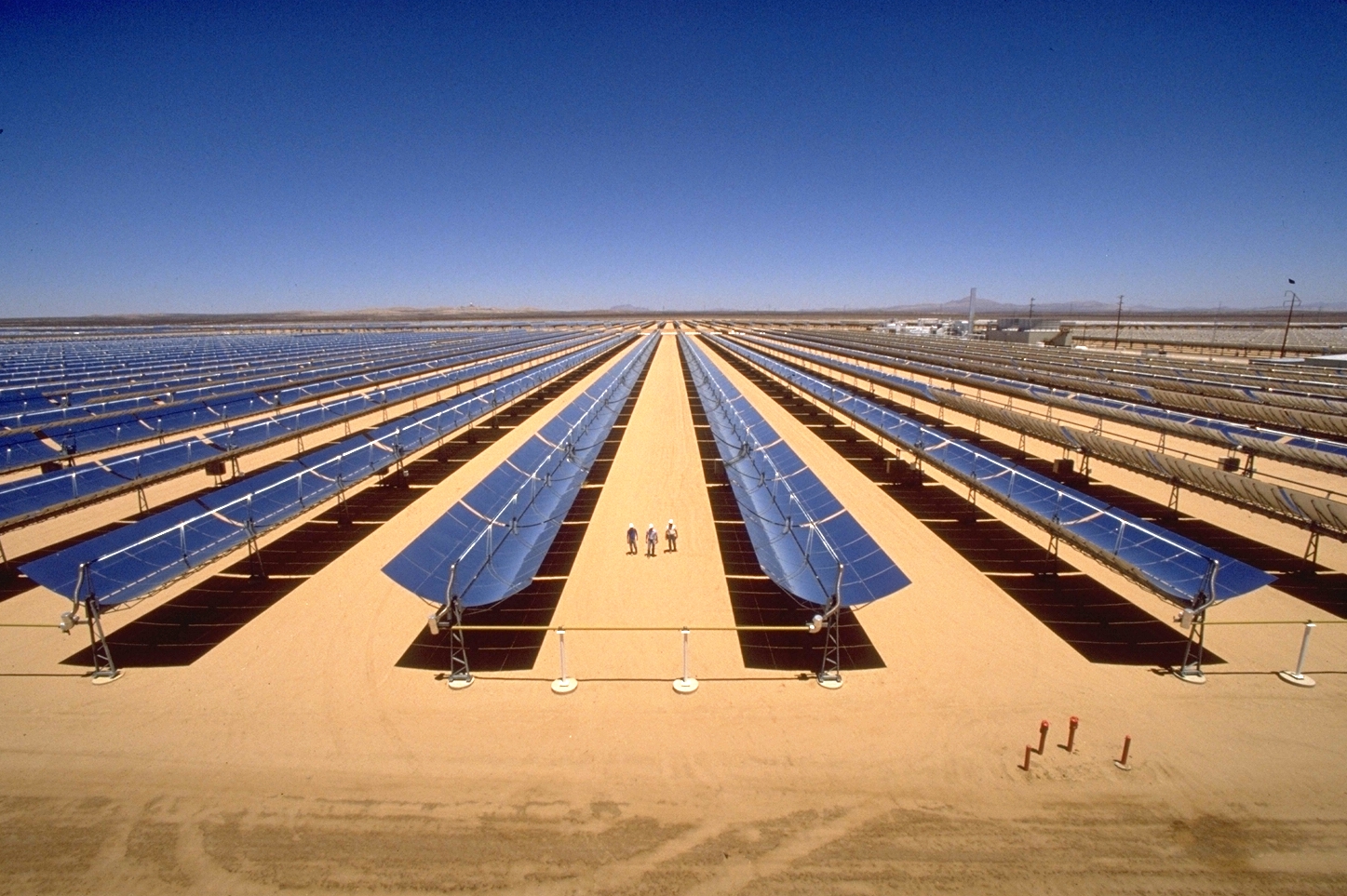
While most of the other subsidies are based on solar power production, the tariff is unique in that it taxes international solar panel production to bolster domestic panel production, not domestic power production. It is as if the policy loses sight of the end-goal of power production in the pursuit of component production. But, in the end, we shouldn't care who's producing the nuts and bolts. Who harvests the energy is much more important. What we consume matters much more than what we produce. To provide an example, if one country, say "China", produces solar panels, while another country, say the "U.S.", consumes the solar panels, which country ends up producing more of its electricity from clean energy sources? Although "China" goes through all of the hard work of production, it is the "U.S" that reaps the benefits of solar power consumption.

Recent experience has shown us that cheap Chinese solar panels facilitated the low-cost installation of many rooftop panels, thereby strengthening the solar power industry in the United States. We need to face the fact that the Chinese can produce solar panels at a comparative advantage. They are willing to jeopardize their own environment to produce the panels; this is a cost that we refuse to bear.
US manufacturers of solar-grade silicon would never be able to replicate the actions of the Chinese. Porges stresses that “production in the United States is a highly, highly, highly regulated process” and McCue misses no opportunity to emphasize the extensive waste management efforts of his company. Shi categorically contrasts the US market with Chinese manufacturers, claiming that if silicon tetrachloride poisoning “happened in the United States, you'd probably be arrested."
The fact that solar panels can be produced so easily in China should actually be a good omen for solar power advocates. The technology has been developed and has diffused to such a degree that even a low productivity country such as China can produce them competitively.

Another argument for liberalizing solar panel production follows Richard Baldwin's recent works on "Globalization's Second Unbundling" and the role of supply chains in industrial policy. The old trick with using tariffs to create an entire domestic infant industry has lost its effectiveness. Nowadays, countries tend to integrate themselves into supply chains. Instead of mastering the entire production process, countries can now specialize in one component, and then gain a comparative advantage in producing that one component. Thus, the United States really should worry less about the production of solar panels and start worrying more about other high value-added activities involved in the development of clean energy.

On this topic, I'm thinking specifically of the development of smart grid technologies. This is something that Europe has been trying to develop as well, so the returns from an effective development of a smart grid would be massive. It would facilitate greater clean energy production in all countries, and would also allow us to reap the gains of cheaper clean energy components, no matter if they come from China or are produced domestically. The smart grid also has an uncertain right tail. From the UCLA Smart Grid Energy Research Center:
While every major media source today is talking about the Smart Grid due to its importance to the national energy policy agenda, it is still unclear to many as to what this grid of the future will look like. In-fact, it is like trying to predict what an iPhone would have looked like in the year 1984 (25 years ago), when a cell phone was simply a mobile telephone. There is tremendous opportunity for creativity, experimentation and research in the defining of the Future Smart Grid. Throwing open this opportunity to students in universities or entrepreneurs in industry could result in new and currently unimaginable possibilities for the grid of the future. Therefore, while the utility community is trying to determine this singular vision of the grid of the future, the eventual outcome is impossible to predict, but the community at large needs to ensure that those who want to experiment with meritorious ideas get the appropriate resources, opportunities and incentives to do so.
Industrial policy, by its virtues, tries to change comparative advantage. But it should be designed to create new comparative advantages in new fields, not to fight old comparative advantages in old fields. It should be used to find new value-add technologies, like smart grids, and not mess with old vanilla components, such as polysilicon solar panels. Global warming is, indeed, global, and well designed international trade policy will be an important component in that fight.

P.S. While the following is pure speculation, an extended version of Baldwin's "rebundling" of globalization and regional comparative advantage would seem to justify the U.S. working with Latin American countries to help promote component production for a smart grid. This would help cement the Western Hemisphere's regional comparative advantage in a critical technology for the future. Ideas like these would constitute a form of industrial policy that goes beyond one's borders in order to secure a domestic advantage. This seems like an exciting route for future policy.

P.P.S. Funny quote from the NYT article on the solar tariff, can you figure out why?
“This is really a surprise,” he said in a telephone interview. “It’s really dangerous.” Mr. Li said that Chinese companies would “certainly” retaliate by filing a trade case at China’s commerce ministry accusing big American chemical companies of dumping polysilicon, the main ingredient in solar panels, on the Chinese market.

Friday, June 8, 2012

Friday Roundup

China is not much of a global economic leader. China doesn't see financially protecting Europe as critical for its own economy; it feels that is is segmented enough to protect itself. This also shows how China is not willing to provide global public goods (ie stable finance). It is no economic hegemon, and therefore doesn't act in a way conducive to global economic coordination.

There's been a series of good posts from FT alphaville on the issues facing European finance. Given the meteoric rise and fall of finance in Europe, one has to wonder why the markets didn't price in the risk. The most plausible answer? There was too much that they could never have known; markets were too opaque. This should be a lesson for people who think they can "calculate" the optimal level of risk. You know too little about probabilities to make a surefire judgment; you should resort to looking at fragilities instead.

Banking union? Not likely. International economic coordination is hard, and Europe isn't quite up to it. There's just too many different interests at play for a banking union to work; who would we hold responsible to pay? Banking is a market that extends beyond governance, which makes it almost impossible to solve the problems with capital flight and get the Euro on solid footing.

China is slowing down further: steel edition It's really quite staggering how many different factors are converging at the same time: China bleeding into Australia, India slowing down, and then the Eurozone is falling apart. We have no idea how bad it's going to get, which makes the fragility of all financial systems particularly worrisome.

Global equities fall on the announcements of one Federal reserve chair. Asia was counting on further easing, and the fact that Bernanke didn't come out clearly in support of it is not good news. The announcement really marks how the United States truly is a monetary superpower; a tentative decision on QEIII is enough to send markets roiling. These are the kinds of problems that make me really wish that monetary policy was done in a more rule-based fashion that took into account the gigantic output gap. Perhaps something like NGDP targeting...

More on the safe assets story and the fiscal cliff. This shadow banking dimension is something I want to investigate going forward because it seems to be a new channel for traditional fiscal and monetary policies. Shadow banking seems to make fiscal policy more powerful as it improves the stock of collateral, whereas it makes monetary policy more problematic as stocks of collateral are bought up.

An interesting look at the linkages between Europe and the United States. I think the finance data coupling indicates that the relationship really goes beyond simple export statistics. This is an interesting problem from the concepts of "opacity", because we really don't know the extent of the connection. All that we know is that there are hints of financial coupling, which might make the Eurozone contagion problematic for the United States.

Friday, June 1, 2012

Friday Links and Thoughts

While volatility might be good for antifragility, the presence of volatility hardly means systems are any more advanced. An old trade paper looks at how complexity can be a source of comparative advantage between nations. Because of better institutions in more developed countries, they are able to produce goods of higher complexity at a comparative advantage.  This then explains why less developed countries tend to produce "commodities" that have higher international volatility.

Another trade paper on financial flows and crises.  The abstract is pretty interesting stuff:
In recent years a number of emerging markets experienced rapid expansions in domestic credit. Though …nancial deepening is greatly beneficial to economic growth, it is feared that credit booms increase the likelihood of banking crises. This paper establishes that credit booms are indeed associated with episodes of banking system distress, and that the e¤ect is highly nonlinear in both credit growth itself and the in the impact of other variables during credit booms. We find that larger and more prolonged booms and those coinciding with higher in‡ation and, to a lesser extent, low economic growth are more likely to end in crisis. By contrast, external factors such as real exchange overvaluation or the current account do not seem to consistently affect the crisis probability. Better banking supervision and greater trade openess seem to reduce the crisis probability. 

What I find interesting is that it states exchange rate overvaluation shouldn't affect the probability of a crisis. However, with the Greek situation, I wonder if exchange rate overvaluation would have any effect on the magnitude of the crisis.  Given that overvaluation makes equilibriating trade more difficult, it should theoretically have an effect.

Why can't we just let the power of comparative advantage do its work in solar panel markets?  Of all the things we could be throwing tariffs onto, why solar panels?  Do they produce some externality in another country that we need to be accounting for?  Are we taxing our domestic firms in some way that the tariff would need to balance?  It seems like the primary effect of the tariff would to be slow down the integration of solar panels into the United States.  Maybe instead of protecting our solar panel industry we could start to work harder on a smart grid or other higher value-added products.

More work on globalization's second rebundling as applied to foreign direct investment.  I think it's interesting to think of trade as a combination of locally sourced products and locally consumed products.  The mixes between these two regimes then creates the overall trends of trade, with the wheel-spoke systems characteristic of the second rebundling.

European financial markets are freezing up.  Repo curves are getting inverted; investor uncertainty is shooting through the roof.

Yay, capital injections for Bankia!  While capital injection is the right move, the fact that it's needed is terrifying.  However, spreads on Spanish debt is shooting up through the roof; if Portugal's story was any guide, this does not bode well for the Spanish economy. Eurozone contagion might just spread even if Greece stays with the Euro.

China, why more stimulus? China is pouring more money into large investment projects even though the current investments have a severely negative rate of return. 70 more airports? Even more housing? More railroads? China may not necessarily be overinvested, but the rate at which they're trying to "rebalance" to higher consumption is going in the wrong direction. Pouring good money after bad is not a long term solution to the crisis. The only hope is that the stimulus can tide us over until regional imbalances can be addressed. However, with the increasingly higher levels of credit from the central government, the fragility and the large negative consequences it can engender is terrifying.