Showing posts with label Trade. Show all posts

Saturday, June 9, 2012

(International Trade) Walking on Sunshine

Unleashing the power of the sun international trade in clean energy production


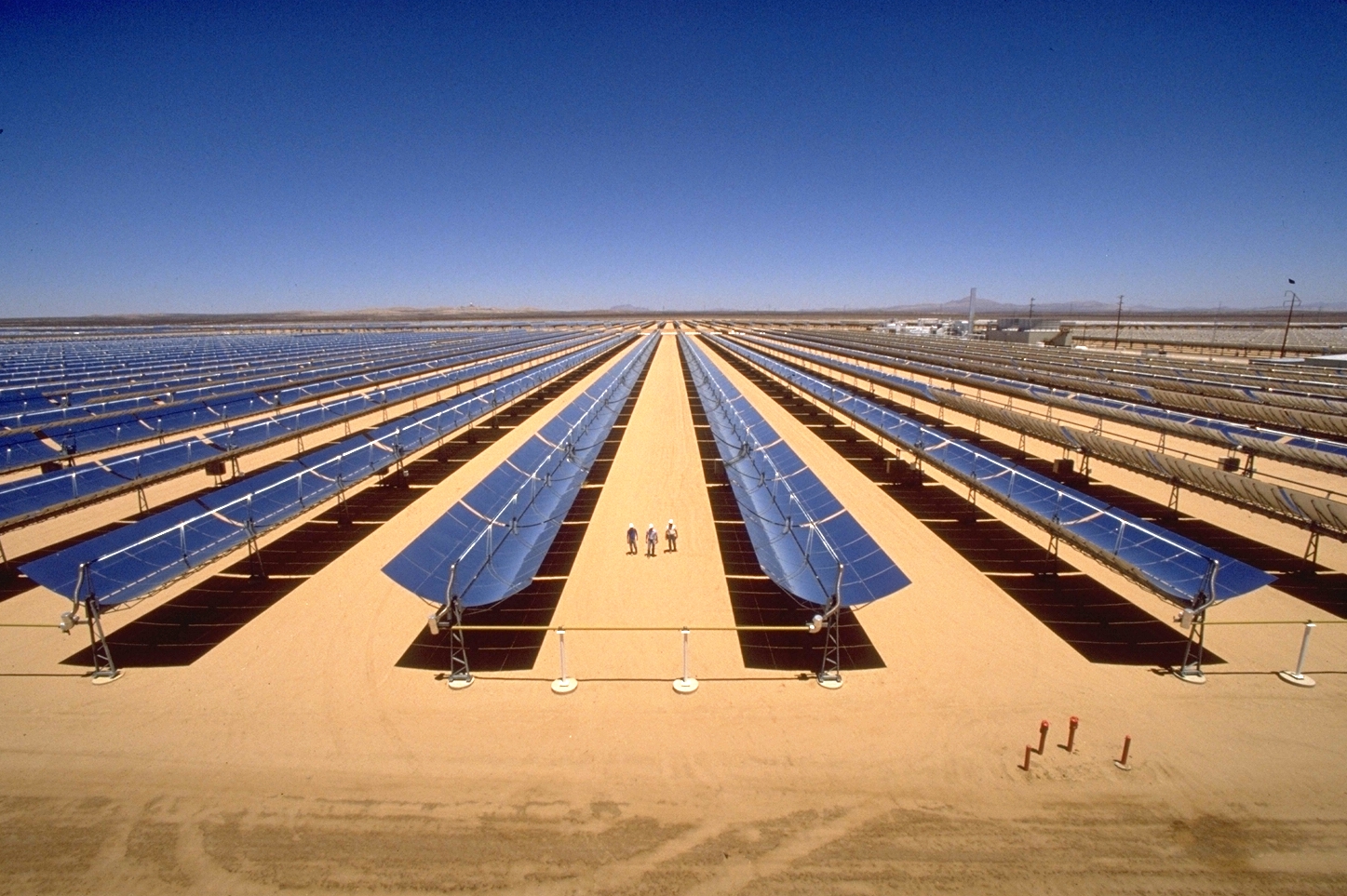
(Photo credit: http://seidmaninstitute.com/wp-content/uploads/2011/01/solar-panels.jpg)

International trade has been one of the most powerful forces in promoting technology development and diffusion. Why should this be any different for the clean energy industry? Without a doubt, one of the largest crises modern economies face in the medium-term is that of energy. Modern production depends on high-density energy sources; without them, many cornerstones of society, such as transportation, manufacturing, and agriculture would be impossible.

To begin the discussion, it's useful to describe some stylized facts about clean energy production. On a whole, it's an industry that exhibits increasing returns to scale. While current costs are relatively high, it's hoped that by increasing the scale of production, costs will be lowered in the future. I can think of at least three mechanisms that make this the case.

First: research and development. Much of the current knowledge about clean energy is quite limited and is not enough to create sources of energy competitive with fossil fuels. Thus, small amounts of investment are unlikely to create enough of a critical mass to make clean energy competitive. Instead, large increases in investment may result in a breakthrough which can then diffuse through the market. As firms compete with each other, this may result in more knowledge spillovers, creating ever more efficient sources of energy.

Second: scale of production. The average businessman can't produce solar panels; large scale production requires at least a year of developing infrastructure, and the complex chemical knowledge behind creating the solar panels entails a large amount of fixed costs as well. Panel production only becomes profitable at a certain critical threshold of demand, making the industry subject to strong increasing returns.

Third: scale of distribution. A major problem with popular clean energy sources such as solar or wind is that they can be intermittent. Solar cells can't power a house when the sun doesn't shine; windmills can't power factories if the wind doesn't blow. Smart grids offer a solution by allowing utilities to dynamically allocate these volatile sources of energy. However, the service provided by smart grids is a public good. Companies can not opt out of using the grid, making the good non-excludable. Companies can use the information utilities offered by the grid without excluding other firms, making the good non-rivalrous. It's the classic example of a public good that a perfectly competitive market can't provide. Thus, if the panels are produced at a larger scale, this allows more efficient distribution of the energy through a smart grid: a critical component of clean energy development.

Scale economies make trade very important because the large international market provides the necessary demand for companies. However, scale economies can also justify industrial policy, Governments may want to promote domestic clean tech companies to carve out a larger share of the global market. Clean tech is an especially lucrative field for industrial policy as it also represents one of the "advanced manufacturing sectors with high technological and skills requirements"" that the US has dominated in the past. A recent Brookings report comments on the importance of manufacturing for the United States:
Manufacturing accounts for 12 percent of U.S. gross domestic product and less than 10 percent of national employment; alone, it cannot power the economic recovery. Yet manufacturing accounts for 70 percent of private-sector research and development in the United States. High levels of investment in R&D, the potential to reduce the trade deficit and the ability to produce good jobs for middle-skilled workers merit the increased attention the sector is receiving after decades of policy drift. The administration, for example, has included a manufacturing initiative of roughly $1 billion in its fiscal 2013 budget, and notable plans have been proposed in Massachusetts and in Chicago.
As a result, the government has implemented various production tax credits, direct loan guarantees (link to Solyndra), and, most recently, tariffs against solar panels produced in China.

This is where I depart from the stylized description and proceed to get incredibly angry at the tariff on solar panels.

While most of the other subsidies are based on solar power production, the tariff is unique in that it taxes international solar panel production to bolster domestic panel production, not domestic power production. It is as if the policy loses sight of the end-goal of power production in the pursuit of component production. But, in the end, we shouldn't care who's producing the nuts and bolts. Who harvests the energy is much more important. What we consume matters much more than what we produce. To provide an example, if one country, say "China", produces solar panels, while another country, say the "U.S.", consumes the solar panels, which country ends up producing more of its electricity from clean energy sources? Although "China" goes through all of the hard work of production, it is the "U.S" that reaps the benefits of solar power consumption.

Recent experience has shown us that cheap Chinese solar panels facilitated the low-cost installation of many rooftop panels, thereby strengthening the solar power industry in the United States. We need to face the fact that the Chinese can produce solar panels at a comparative advantage. They are willing to jeopardize their own environment to produce the panels; this is a cost that we refuse to bear.
US manufacturers of solar-grade silicon would never be able to replicate the actions of the Chinese. Porges stresses that “production in the United States is a highly, highly, highly regulated process” and McCue misses no opportunity to emphasize the extensive waste management efforts of his company. Shi categorically contrasts the US market with Chinese manufacturers, claiming that if silicon tetrachloride poisoning “happened in the United States, you'd probably be arrested."
The fact that solar panels can be produced so easily in China should actually be a good omen for solar power advocates. The technology has been developed and has diffused to such a degree that even a low productivity country such as China can produce them competitively.

Another argument for liberalizing solar panel production follows Richard Baldwin's recent works on "Globalization's Second Unbundling" and the role of supply chains in industrial policy. The old trick with using tariffs to create an entire domestic infant industry has lost its effectiveness. Nowadays, countries tend to integrate themselves into supply chains. Instead of mastering the entire production process, countries can now specialize in one component, and then gain a comparative advantage in producing that one component. Thus, the United States really should worry less about the production of solar panels and start worrying more about other high value-added activities involved in the development of clean energy.

On this topic, I'm thinking specifically of the development of smart grid technologies. This is something that Europe has been trying to develop as well, so the returns from an effective development of a smart grid would be massive. It would facilitate greater clean energy production in all countries, and would also allow us to reap the gains of cheaper clean energy components, no matter if they come from China or are produced domestically. The smart grid also has an uncertain right tail. From the UCLA Smart Grid Energy Research Center:
While every major media source today is talking about the Smart Grid due to its importance to the national energy policy agenda, it is still unclear to many as to what this grid of the future will look like. In-fact, it is like trying to predict what an iPhone would have looked like in the year 1984 (25 years ago), when a cell phone was simply a mobile telephone. There is tremendous opportunity for creativity, experimentation and research in the defining of the Future Smart Grid. Throwing open this opportunity to students in universities or entrepreneurs in industry could result in new and currently unimaginable possibilities for the grid of the future. Therefore, while the utility community is trying to determine this singular vision of the grid of the future, the eventual outcome is impossible to predict, but the community at large needs to ensure that those who want to experiment with meritorious ideas get the appropriate resources, opportunities and incentives to do so.
Industrial policy, by its virtues, tries to change comparative advantage. But it should be designed to create new comparative advantages in new fields, not to fight old comparative advantages in old fields. It should be used to find new value-add technologies, like smart grids, and not mess with old vanilla components, such as polysilicon solar panels. Global warming is, indeed, global, and well designed international trade policy will be an important component in that fight.

P.S. While the following is pure speculation, an extended version of Baldwin's "rebundling" of globalization and regional comparative advantage would seem to justify the U.S. working with Latin American countries to help promote component production for a smart grid. This would help cement the Western Hemisphere's regional comparative advantage in a critical technology for the future. Ideas like these would constitute a form of industrial policy that goes beyond one's borders in order to secure a domestic advantage. This seems like an exciting route for future policy.

P.P.S. Funny quote from the NYT article on the solar tariff, can you figure out why?
“This is really a surprise,” he said in a telephone interview. “It’s really dangerous.” Mr. Li said that Chinese companies would “certainly” retaliate by filing a trade case at China’s commerce ministry accusing big American chemical companies of dumping polysilicon, the main ingredient in solar panels, on the Chinese market.

Friday, June 1, 2012

Friday Links and Thoughts

While volatility might be good for antifragility, the presence of volatility hardly means systems are any more advanced. An old trade paper looks at how complexity can be a source of comparative advantage between nations. Because of better institutions in more developed countries, they are able to produce goods of higher complexity at a comparative advantage.  This then explains why less developed countries tend to produce "commodities" that have higher international volatility.

Another trade paper on financial flows and crises.  The abstract is pretty interesting stuff:
In recent years a number of emerging markets experienced rapid expansions in domestic credit. Though …nancial deepening is greatly beneficial to economic growth, it is feared that credit booms increase the likelihood of banking crises. This paper establishes that credit booms are indeed associated with episodes of banking system distress, and that the e¤ect is highly nonlinear in both credit growth itself and the in the impact of other variables during credit booms. We find that larger and more prolonged booms and those coinciding with higher in‡ation and, to a lesser extent, low economic growth are more likely to end in crisis. By contrast, external factors such as real exchange overvaluation or the current account do not seem to consistently affect the crisis probability. Better banking supervision and greater trade openess seem to reduce the crisis probability. 

What I find interesting is that it states exchange rate overvaluation shouldn't affect the probability of a crisis. However, with the Greek situation, I wonder if exchange rate overvaluation would have any effect on the magnitude of the crisis.  Given that overvaluation makes equilibriating trade more difficult, it should theoretically have an effect.

Why can't we just let the power of comparative advantage do its work in solar panel markets?  Of all the things we could be throwing tariffs onto, why solar panels?  Do they produce some externality in another country that we need to be accounting for?  Are we taxing our domestic firms in some way that the tariff would need to balance?  It seems like the primary effect of the tariff would to be slow down the integration of solar panels into the United States.  Maybe instead of protecting our solar panel industry we could start to work harder on a smart grid or other higher value-added products.

More work on globalization's second rebundling as applied to foreign direct investment.  I think it's interesting to think of trade as a combination of locally sourced products and locally consumed products.  The mixes between these two regimes then creates the overall trends of trade, with the wheel-spoke systems characteristic of the second rebundling.

European financial markets are freezing up.  Repo curves are getting inverted; investor uncertainty is shooting through the roof.

Yay, capital injections for Bankia!  While capital injection is the right move, the fact that it's needed is terrifying.  However, spreads on Spanish debt is shooting up through the roof; if Portugal's story was any guide, this does not bode well for the Spanish economy. Eurozone contagion might just spread even if Greece stays with the Euro.

China, why more stimulus? China is pouring more money into large investment projects even though the current investments have a severely negative rate of return. 70 more airports? Even more housing? More railroads? China may not necessarily be overinvested, but the rate at which they're trying to "rebalance" to higher consumption is going in the wrong direction. Pouring good money after bad is not a long term solution to the crisis. The only hope is that the stimulus can tide us over until regional imbalances can be addressed. However, with the increasingly higher levels of credit from the central government, the fragility and the large negative consequences it can engender is terrifying.

Monday, April 30, 2012

Globalization's Second Rebundling

When Old Trade Theory turned New, New Trade Theory turned Old, and Future Trade Theory may turn New again.


What will the production technology of the future look like?  A recent Economist essay on 3D printing hypothesizes a third industrial revolution, in which small parts could be “printed” on an individualized basis.  This would be a departure from the economies of scale that characterize capital intensive industries, as one would no longer need to submit orders for thousands of a specialized part; one prototype would get the job done.

But how will this transformation affect patterns of international trade?  Before arriving at a conclusive claim on the effects on trade, it’s important to get some perspective on the development of trade theory over the past few decades.  Old trade circa Ricardo and Heckscher-Ohlin-Samuelson was founded upon comparative advantage and natural factor endowments.  Countries scarce in labor would import labor intensive products, whereas countries scarce in capital would import capital intensive products.  This theory of trade then failed to explain the fact that many capital rich countries tended to import capital intensive products!  In a large scale test, HO predicted the direction of trade across multiple industries with 49.8% accuracy – lower than that of chance.

New Trade arose to explain these empirical irregularities by incorporating monopolistic competition, internal scale economies, and transportation costs.   Now that firms were monopolistically competitive, intra-industry trade began to play a much larger role.  Because the various firms in the capital intensive core could trade more cheaply with other core firms for intermediate inputs, firms would aggregate in the core.  This dynamic would also create home-market effects, in which an increase for the goods of an industry in the core would create a proportionately higher increase of the production of that good.  Part of the new production goes to feeding domestic industries, while the other part goes out to export as a result of a more competitive industry.

However, recent innovations with respect to transportation costs and communications technologies have reversed this trend.  In the original model, transportation costs functioned as a key reason for why intra-industry trade in the core happened.  Without transportation costs, the firms in the core could trade with the firms in the periphery for intermediate goods; there would be no home market effect. Such reversal of the predictions of New Trade became readily more apparent as new data rolled in.  Even when Krugman was giving his Nobel Prize acceptance speech for his work in trade theory, he noted that New Trade theory was getting old.  One of the canonical examples of New Trade was the development of auto industries.  Within the United States, “home market effects” tended to aggregate auto production in the Midwest (Mitten State represent!).  A Chicago Fed map of auto parts suppliers clearly illustrates this phenomenon:


Yet, in more recent times, a substantial amount of auto production shifted to the south, where labor was cheaper.  In effect, scale economies were overwhelmed by factor endowment advantages; new trade theory was becoming old.

This trend on the international level has been called by Baldwin as “globalization’s second unbundling”.  The reduction of transportation costs and communication costs allows supply chains to be more spread out over a larger region.  Intermediate goods don’t all need to be produced by one country.  Rather, they can be produced by smaller firms distributed over a larger region.  While Japan might be the home of Honda, the Thailand does much of the assembly, and has prospered much more as a part of a new “factory Asia.”  On the other hand, Malaysia tried the old method of building the entire supply chain, and is doing substantially worse.  This new regionalism allows for a greater diffusion of industry and, as a result, is more sensitive to initial factor endowments, much like old trade.

It is in this light that we can analyze the prospects for 3D printing on transforming the face of international trade.  What will happen will depend crucially on whether 3D printing will be generalized or specialized.  If 3D printing uses very general materials, then one firm could create key goods in a wide variety of industries.  There would not be an auto parts supplier and a tablet chip supplier; there would just be one 3D printing factory that could produce all of the small components as needed.  On one hand, the versatility of 3D printing would allow one firm to There would be less monopolistic competition as firms would not be as differentiated.  Taking away this key source of internal economies of scale may accelerate the second unbundling as there would be fewer reasons for firms to aggregate in one region.

On the other hand, if 3D printing is highly specialized, then new firms would quickly proliferate to fill the various market niches.  Monopolistic competition would actually heighten, creating more incentives for industries to agglomerate together.  Along with the increase in oil and transportation costs, transportation from distant factories may make it increasingly difficult for foreign factories to create the specialized components that 3D printing would support.  3D printing would allow such a high level of intra-industry trade.  Especially if the parts become highly specialized, it’s not that unreasonable to imagine that certain 3D printing firms may create the critical components for other 3D printers to continue their operations.  The result would be that we may return again to the world of New Trade Theory, in which initial geographic distributions can have a large effect on the movement and agglomeration of firms.   And as the original Economist article argues, this may result in a return of companies to rich countries as firms try to capitalize on the larger markets there.

With this possible transformation on the horizon, trade policy becomes increasingly important as industrial organization now may become even more fixed in the future.  Yet the fixed nature of trade may be an even stronger argument for higher labor mobility.  If factor mobility and free trade are substitutes, global welfare will be best served by allowing the citizens of poor countries to move to rich countries.  If the firms don’t move, the people will.

Increasing agglomeration of firms will also have an effect on currency unions and exchange rate pegging.  This was a key issue in the debate for the Eurozone:
As the EU moves towards a monetary union, it can be expected that the geographic concentration of industries will increase further, in line with developments so far, and paralleling United States experience (Krugman, 1991b). This, in turn, would raise the likelihood of asymmetric shocks affecting EMU member countries, thereby raising difficulties of adjustment in the absence of nominal exchange-rate instruments
If countries become increasingly heterogeneous and labor mobility is still limited by de facto issues such as language and culture, national sovereignty over monetary policy will be vital for each country’s stability.

With the technological revolution of 3D printing, New Trade Theory may become relevant again.  Globalization unbundled itself with the initial decrease in transportation costs that facilitated international trade.  It then rebundled itself as monopolistic competition and intra-industry trade caused firms to agglomerate in a global core, away from the periphery.  In recent times, the world has unbundled again with decreases in coordination costs allowing more regional supply chains.  The future may hold a second rebundling, in which 3D printing causes firms to return to countries and retreat from deep global integration.  This will have massive implications for globalization and trade policy as we watch these trends unfold in the coming decades.